

King Hatshepsut
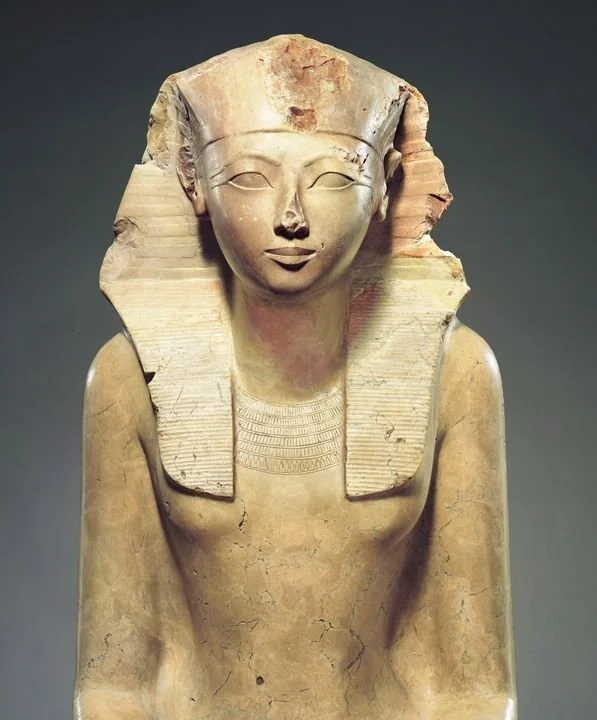
1507 BCE - Jan 16, 1458 BCE (approx. 37-47)
“Hatshepsut has become one of the most celebrated and controversial women of Egypt and the ancient world in general.” – Marc van de Mieroop
Political Trailblazer
Biography
Hatshepsut (she/her) was one of the first female pharaohs to rule Egypt with full authority, reigning for over 20 years during the Eighteenth Dynasty from around 1479–1458 BCE. Born in Thebes to Pharaoh Thutmose I and his Great Royal Wife Ahmose, she grew up learning about leadership, religion, and the arts. She married her half-brother Thutmose II and bore a daughter, Neferure, while her stepson, Thutmose III, was too young to rule. When Thutmose II died, Hatshepsut initially became co-regent for her stepson, but after several years, she boldly assumed the full powers of pharaoh herself, ruling as king in a male-dominated system.
Hatshepsut was a master strategist. She strengthened her position by marrying her daughter to Thutmose III and installing Neferure as God’s Wife of Amun, one of the most powerful offices a woman could hold. To legitimize her unprecedented rule, Hatshepsut claimed she was the divine daughter of Amun, with reliefs depicting the god visiting her mother to conceive her. She also adopted the royal regalia of male pharaohs, beard, crown, and traditional masculine statues, while inscriptions maintained her female identity, asserting that a woman could hold the highest authority without undermining her gender.
Hatshepsut’s reign brought economic prosperity and cultural flourishing. She renewed trade with distant lands, including western Asia, the Aegean, and the Land of Punt, bringing back gold, incense, ebony, exotic animals, and rare woods. These resources fueled monumental building projects, lavish temples, and a renaissance in art and craftsmanship. Under her guidance, Egypt became a hub of culture, with innovative sculpture, painting, and jewelry reflecting her vision of leadership and divine connection.
Hatshepsut is remembered as one of Ancient Egypt’s greatest builders. Her crowning achievement is the Temple of Hatshepsut at Deir el-Bahri, an architectural marvel carved into cliffs along the Nile, with terraces, pools, and trees imported from Punt. She also erected towering obelisks at Karnak, built the Red Chapel, restored the Mut Precinct, and commissioned the temple of Pakhet at Beni Hasan. Her monuments showcased not only her power but the wealth and stability of her kingdom, leaving a legacy that continues to inspire awe today.
Deeply devoted to the gods, especially Amun-Ra, Hatshepsut intertwined her rule with religion. Claiming divine parentage and constructing temples and shrines, she reinforced her authority as a ruler whose reign was preordained by the gods. Her leadership demonstrated the connection between political power and spiritual legitimacy in Ancient Egypt.
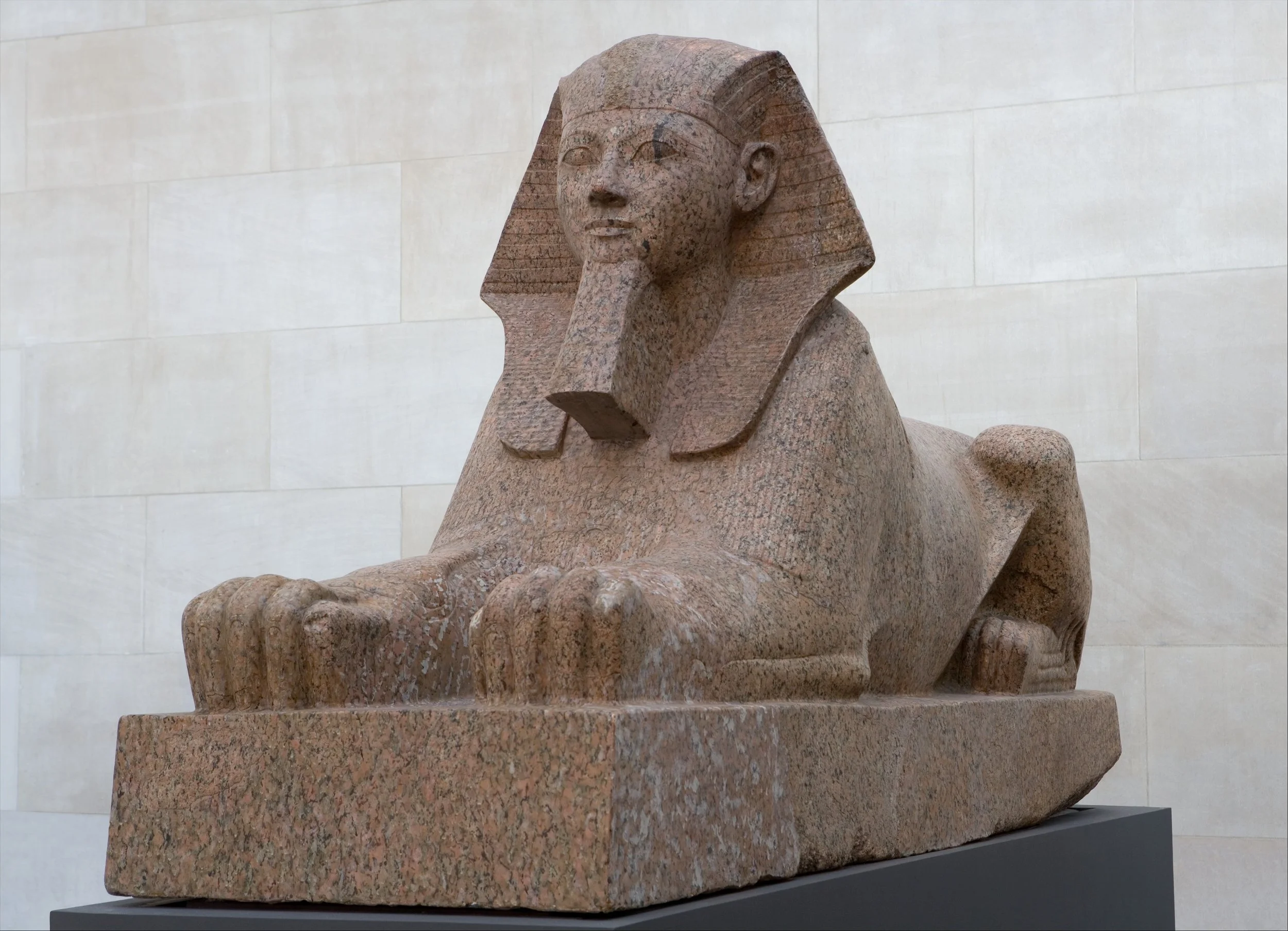
Despite her extraordinary achievements, Hatshepsut’s reign was controversial. After her death, Thutmose III, her stepson, likely sought to erase her from history: her statues were defaced, her name removed from monuments, and her deeds attributed to him. For centuries, her story faded, until the 19th century, when Jean-François Champollion and later archaeologists rediscovered her identity through inscriptions and hidden statuary. In 2006, Egyptologist Zahi Hawass identified her mummy, revealing she died naturally in her fifties from an abscess following a tooth extraction.
Hatshepsut’s story is one of power, ingenuity, and resilience. She challenged gender norms, demonstrated that women could rule with authority, and left an indelible mark on history. The Temple of Hatshepsut remains a celebrated site, drawing visitors from around the world, while her reign inspires millions to embrace leadership, creativity, and determination. She remains a timeless example of female empowerment, visionary governance, and enduring legacy in human history.