

Sylvia Rivera
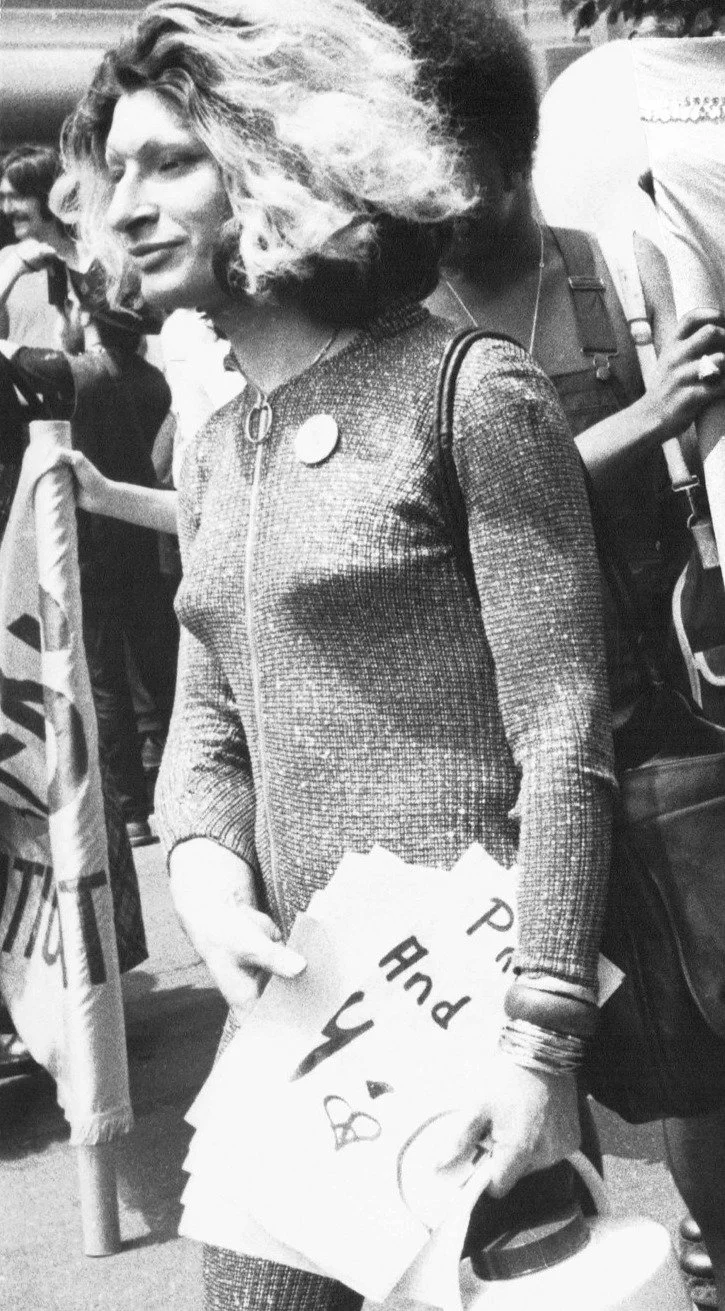
July 2, 1951 - February 19, 2002 (50)
“I have been beaten. I have lost my home. I have lost my job. For gay liberation — and you all treat me this way?”
Activist
Biography
Sylvia Rivera (she/her) was the kind of fire that burns through injustice, the kind that cannot be contained. A trailblazing activist, drag queen, and mother of the movement, Sylvia fought not only against the oppression of queer and trans people by society, but against the erasure and exclusion of her own community within the LGBTQ+ movement itself.
Born in 1951 in New York City to a Puerto Rican father and a Venezuelan mother, Sylvia’s early life was marked by pain and survival. After her mother’s death by suicide when Sylvia was just three years old, she was left in the care of her grandmother, a strict, religious woman who rejected Sylvia’s femininity. When Sylvia began wearing makeup and expressing herself freely, her grandmother beat her and eventually threw her out of the house. She was just ten years old. Alone and homeless on the streets of New York, Sylvia turned to sex work to survive, and it was there that she found her chosen family among the city’s drag queens, who embraced her and gave her the name Sylvia.
“I just want to be who I am,” she would later say. “Ray left home at the age of 10 to become Sylvia — and that’s who I am.”
In 1963, Sylvia met Marsha P. Johnson, another young, fearless drag queen who would become her sister, friend, and comrade. Together, they would become the heartbeat of the Gay Liberation Movement. When police raided the Stonewall Inn in June 1969, Sylvia was only 17, but she was there, shoulder to shoulder with others fighting back against years of brutality and repression. Whether or not she threw the first Molotov cocktail (as legend suggests), Sylvia’s defiance at Stonewall symbolized the uprising’s true spirit: the rage, resilience, and joy of those society had cast aside. “I’m not missing a minute of this — it’s the revolution!” she declared.
After Stonewall, Sylvia and Marsha refused to let the most marginalized voices, trans people, drag queens, and homeless queer youth, be forgotten in the movement they helped ignite. Together they founded STAR, Street Transvestite Action Revolutionaries, one of the first organizations in the world to advocate for trans rights and provide housing, food, and support to homeless LGBTQ+ youth. STAR House became a refuge for those abandoned by both family and society, a space where survival was sacred and chosen family was everything. Sylvia, barely in her twenties, became a mother to the movement.
Even as she built community, Sylvia faced relentless rejection from mainstream gay organizations that saw her visibility as a liability. In 1973, at the Christopher Street Liberation Day Rally, she was blocked from the stage and booed by fellow activists when she finally fought her way to the microphone. Her speech, now legendary, was a cry of truth and pain:
“I have been beaten.
I have had my nose broken.
I have been thrown in jail.
I have lost my job.
I have lost my apartment.
For gay liberation — and you all treat me this way?”
That moment, known as the “Y’all Better Quiet Down” speech, remains one of the most powerful testaments to the hypocrisy and exclusion Sylvia fought her entire life. After years of battling addiction, homelessness, and heartbreak, including the tragic death of her sister-in-arms Marsha P. Johnson in 1992, Sylvia briefly withdrew from activism although she never lost her fire.
In the 1990s, Sylvia returned to New York’s streets with renewed purpose. In Marsha’s memory, she revived STAR and created Transy House, another safe haven for unhoused trans people. She reconnected with the LGBTQ+ community as it began to more fully recognize trans identities and intersectional struggles. At the 25th anniversary of Stonewall in 1994, Sylvia marched once more, this time, not as an outcast, but as a legend. “The movement had put me on the shelf,” she said, “but they took me down and dusted me off… The young ones were calling from the sidewalk, ‘Sylvia, Sylvia, thank you — we know what you did.’”
Sylvia Rivera died in 2002 from liver cancer, but her legacy refuses to rest. Her ashes remain at the Metropolitan Community Church of New York, where she worked feeding the hungry, and where a food pantry and homeless shelter now bear her name. Every Sunday, her ashes are brought out for mass and dinner, a living ritual of remembrance.
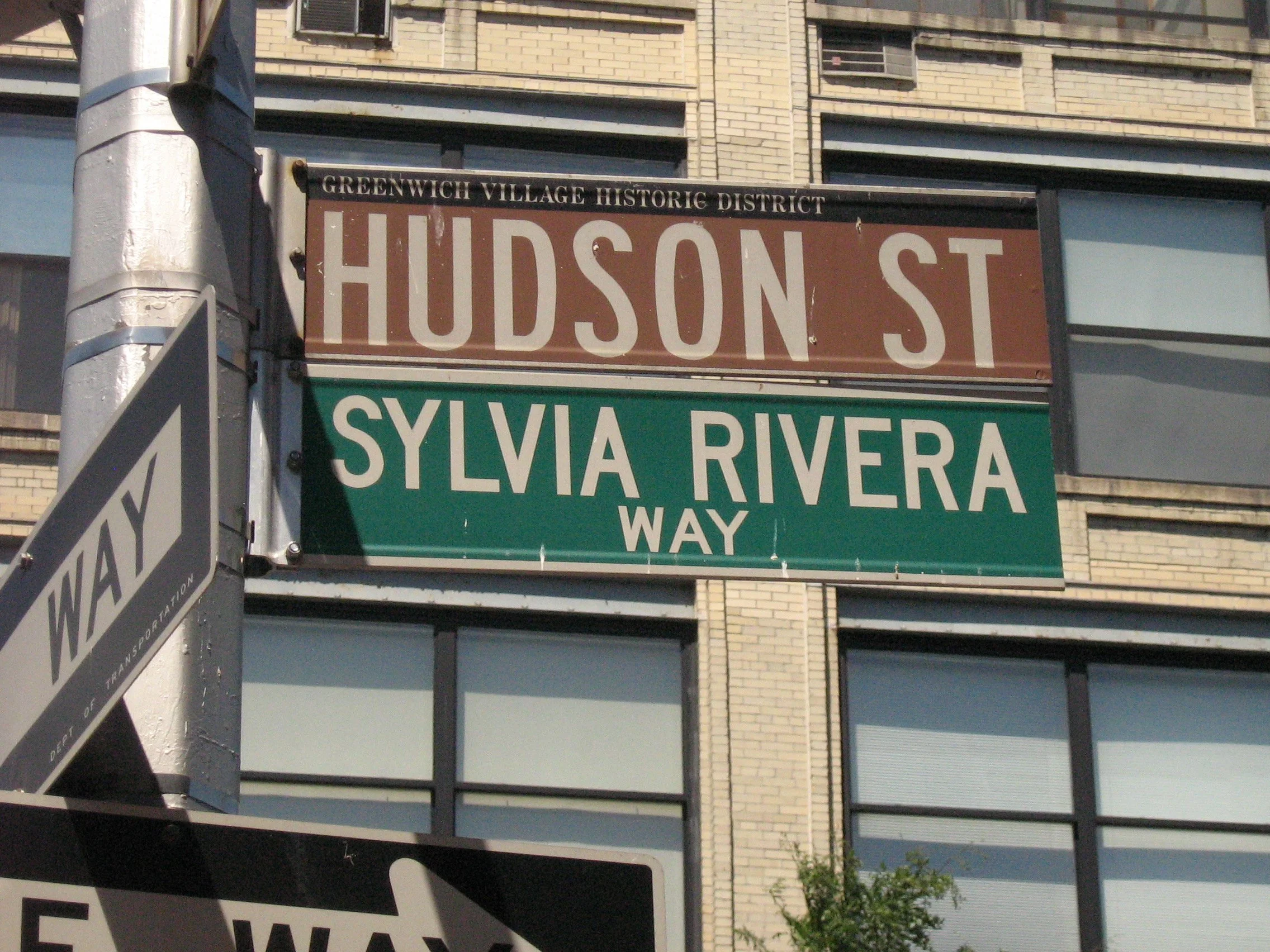
Her name lives on through the Sylvia Rivera Law Project, which continues her fight to ensure that all people, especially those marginalized by gender, race, or poverty, can live with dignity and self-determination. The intersection of Christopher and Hudson Streets in Greenwich Village, near the Stonewall Inn, is now officially Sylvia Rivera Way, and her portrait hangs in the National Portrait Gallery in Washington, D.C.
Sylvia Rivera taught us that liberation means everyone, not just the visible, not just the privileged, not just the palatable. She demanded that no one be left behind, not in the revolution she helped ignite, nor in the future we continue to build.
Her spirit endures in every protest chant, every shelter bed, every chosen family meal, in every person who refuses to be told to “quiet down.”