

Alice Walker
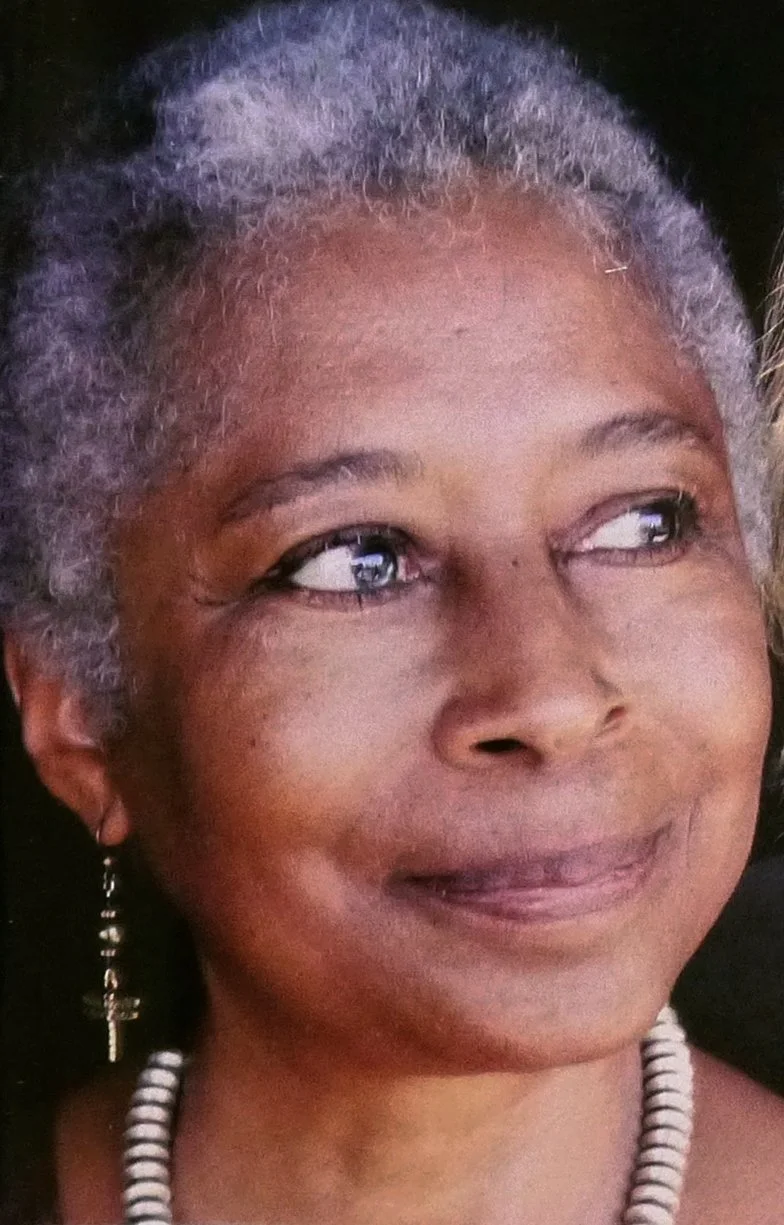
February 9, 1944 - Present (82)
“The most common way people give up their power is by thinking they don't have any.”
Activist/Artist/Performer
Biography
Alice Walker (she/her) is a literary force, activist, and visionary whose words and work have redefined what it means to fight for liberation through protest and the power of storytelling, empathy, and reclamation.
Born in 1944 in Eatonton, Georgia, the youngest of eight children, Walker grew up in a sharecropping family under the shadow of segregation and poverty. When she was eight, a childhood accident left her blind in one eye after being shot with a BB pellet, a traumatic event that made her retreat inward, where writing became both refuge and revolution. Out of that silence, a poet and truth-teller emerged.
After graduating from Sarah Lawrence College, Walker joined the Civil Rights Movement, registering Black voters in Mississippi and working with organizations like the NAACP and the Southern Christian Leadership Conference. Her activism was always intersectional, rooted in race, gender, class, and the human spirit, long before that language existed to describe it.
In 1982, Walker published The Color Purple, a groundbreaking novel that shattered boundaries in literature and culture. The story of Celie, a poor Black woman surviving and reclaiming her voice in the early 20th century South, resonated around the world. It earned Walker both the Pulitzer Prize and the National Book Award, making her the first Black woman to receive those honors. But more than accolades, The Color Purple became a mirror for generations of women, queer people, and survivors seeking to see themselves with dignity and depth.
Walker’s influence didn’t stop there. Through her essays, poetry, and activism, she gave language to “womanism”, her term for a form of feminism that centers Black women’s experiences and honors their strength, spirituality, and connection to the Earth. Womanism became a global framework for intersectional justice, bridging movements for racial, environmental, and gender equity.
Throughout the 1980s and beyond, Walker used her platform to speak out against apartheid in South Africa, U.S. imperialism, and gender-based violence worldwide. Her essays, including In Search of Our Mothers’ Gardens, challenged readers to see creativity and survival as acts of resistance. Her lifelong commitment to peace and justice also led her to advocate for Palestinian rights, environmental protection, and an end to war.
Walker’s life and art remind us that healing is political, and that storytelling is a sacred act of survival. “The most common way people give up their power,” she wrote, “is by thinking they don’t have any.” Her words continue to awaken that power, in classrooms, movements, and hearts across the world.
Alice Walker’s legacy is not just literary, it is living. It is in the voices she made room for, the systems she challenged, and the truth she demanded we see: that liberation is not given; it is created through the courage to imagine something better.