

Angela Davis
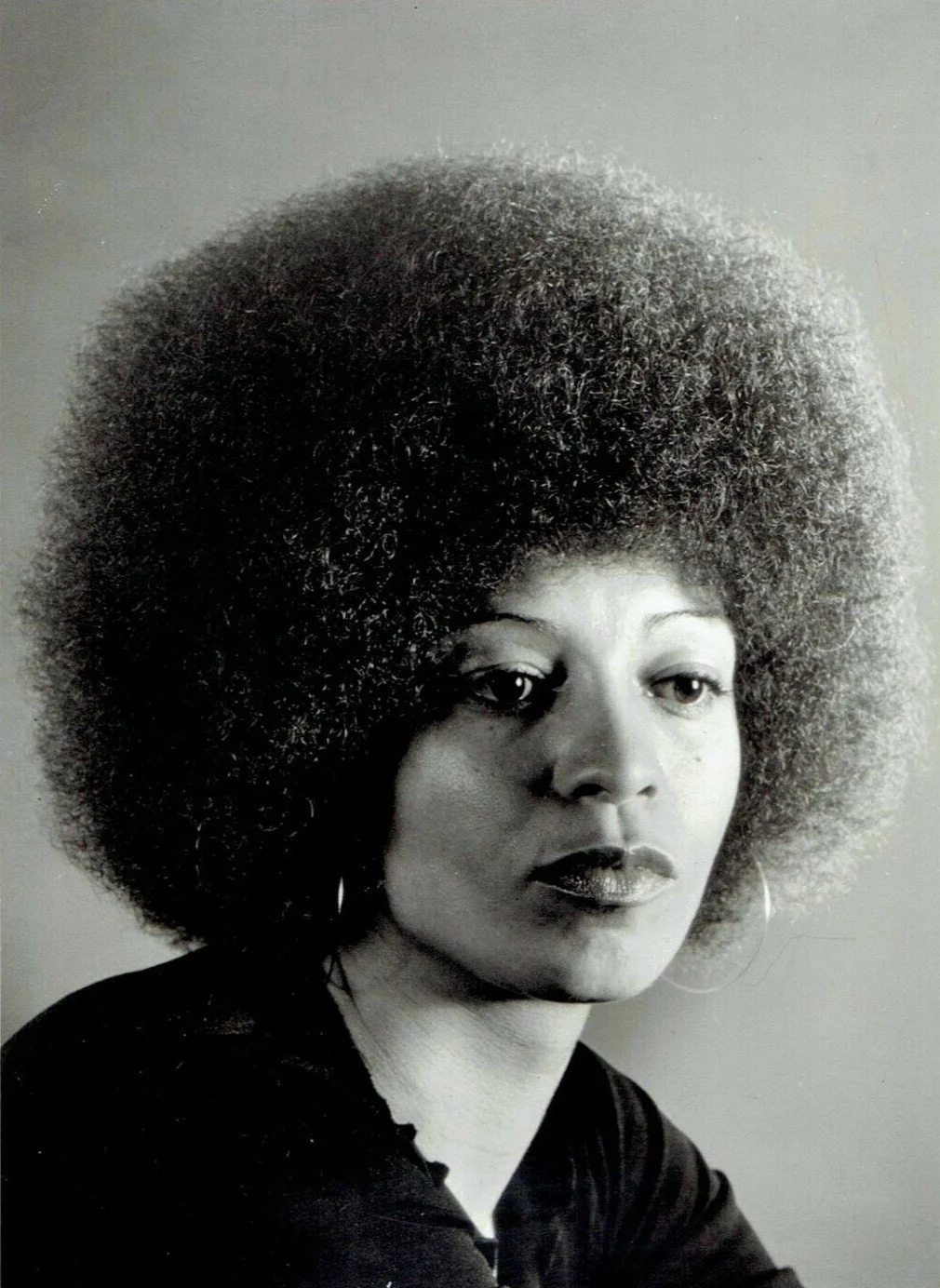
January 26, 1944 - Present (82)
“I am no longer accepting the things I cannot change. I am changing the things I cannot accept.”
Activist/Artist
Biography
Angela Yvonne Davis has spent her life teaching the world what it means to fight for freedom, not only through protest or politics, but through truth, courage, and imagination. Born in 1944 in Birmingham, Alabama, she grew up on “Dynamite Hill,” a neighborhood named for the frequent bombings meant to terrorize Black families integrating all-white communities. This violent backdrop, paired with the example of politically active parents, shaped Angela’s lifelong resistance to silence and oppression.
Davis’s early brilliance took her far beyond Birmingham. She studied philosophy at Brandeis University and later under Herbert Marcuse, a radical thinker who helped her explore ideas of justice, power, and liberation. By the late 1960s, she had joined both the Communist Party USA and the Black Panther Party, fusing her intellectual insight with community organizing and revolutionary action. Her presence, a young, unapologetically Black woman scholar unafraid to challenge systemic racism and capitalism, made her a symbol of resistance in an era of unrest.
That defiance came at a cost. In 1970, Angela Davis was accused of conspiracy and murder after firearms she had legally purchased were used in an attempted prison escape. Forced underground, she was placed on the FBI’s Ten Most Wanted list and later imprisoned. The global “Free Angela” campaign united people across borders, from students to artists to world leaders, demanding her release. When she was acquitted in 1972, Davis emerged as an international icon of justice and resilience.
After her release, Davis never stopped organizing or teaching. She continued to speak out against state violence, systemic racism, and the expanding prison industrial complex, a term she helped bring into national consciousness. In the 1990s, she co-founded Critical Resistance, an abolitionist organization dedicated to ending mass incarceration and imagining new systems of community safety and care. Her work inspired generations to reimagine what freedom looks like, not through punishment or exclusion, but through healing, equity, and collective accountability.
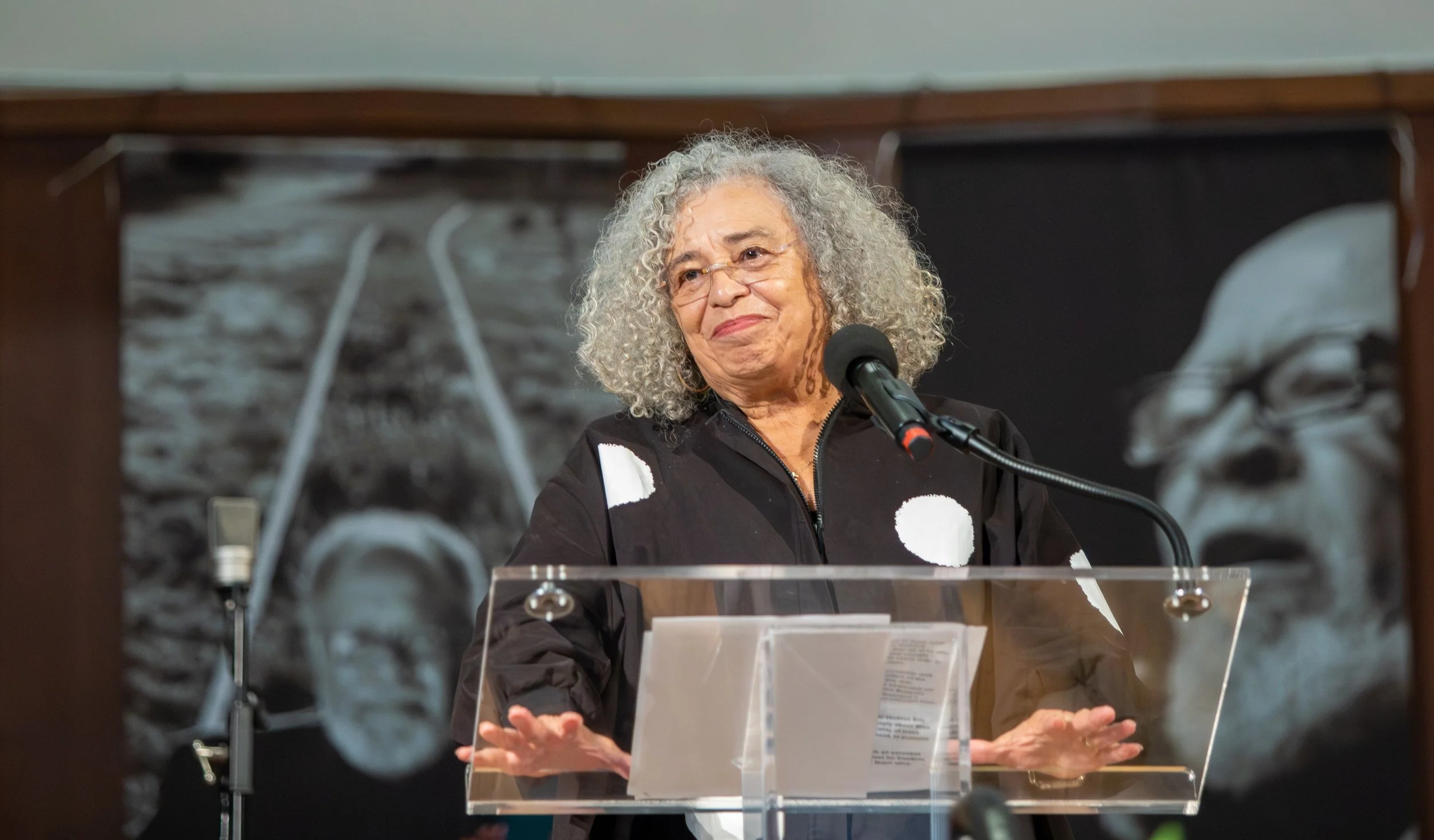
As a scholar and Distinguished Professor Emerita at the University of California, Santa Cruz, Davis has influenced countless students through her writing and teaching in the History of Consciousness and Feminist Studies departments. Her works, including Women, Race & Class and Are Prisons Obsolete? are cornerstones of intersectional feminism and abolitionist thought. She consistently challenged mainstream feminism to center women of color, queer people, and the working class, long before “intersectionality” became common language.
Angela Davis also stands proudly in her identity as a queer Black woman, continuing to advocate for LGBTQ+ rights and liberation within all movements for justice. For Davis, liberation is inseparable from solidarity: “If they come for me in the morning, they will come for you in the night,” she once wrote, a reminder that our struggles are bound together.
Her story is one of unwavering vision: from political prisoner to professor, from revolutionary to philosopher, from the streets of Birmingham to global movements for freedom. Today, Angela Davis remains a guiding light for those who believe that justice cannot be compartmentalized, that to fight for one form of liberation means fighting for all.
Her life reminds us that change begins when we refuse to accept injustice as inevitable, and that courage, compassion, and collective action are the truest forms of revolution.