

Thomas(ine) Hall
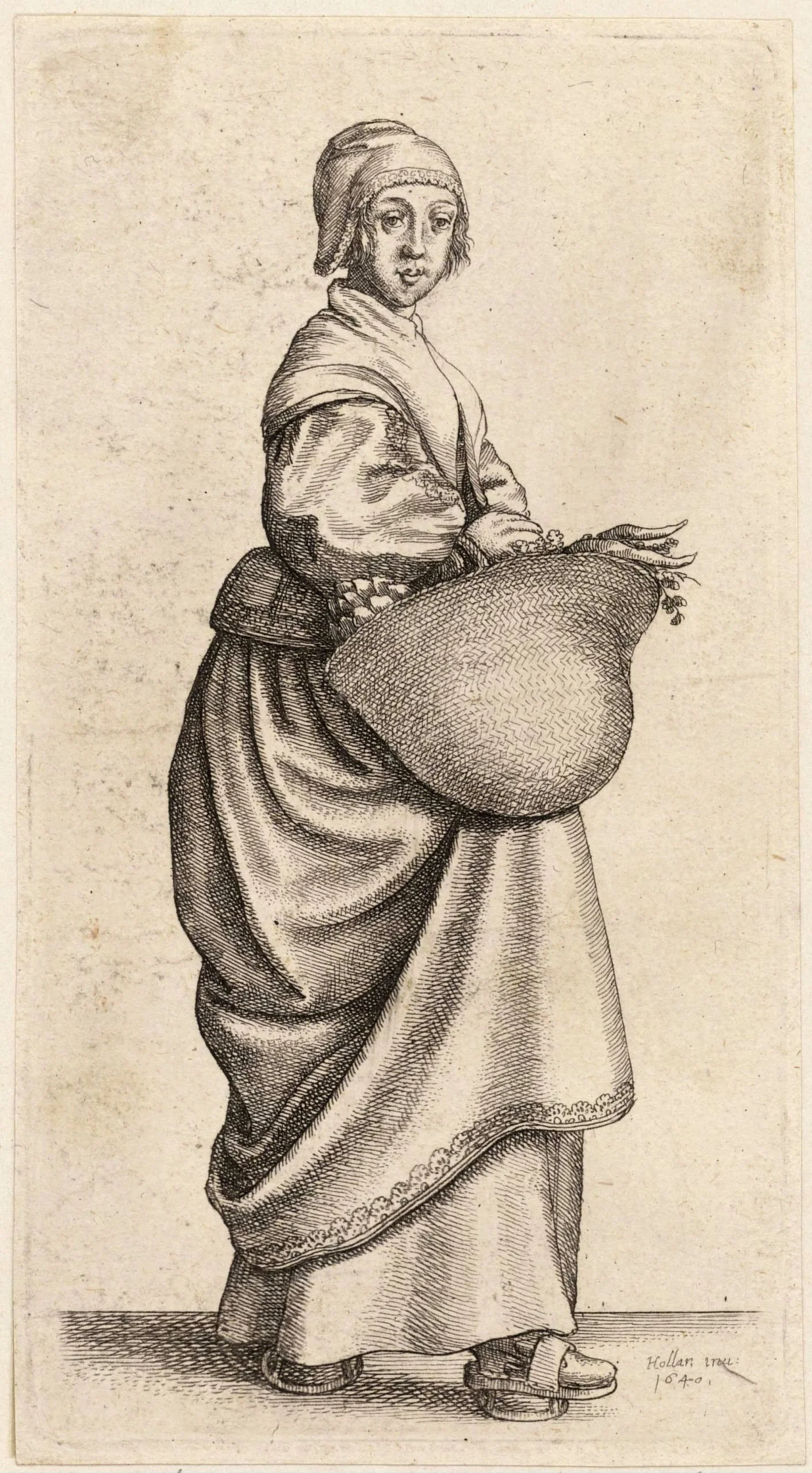
c. 1603 - after April 8, 1629 (approx. 26-28)
“…hee is a man and a woeman.” The court went on to order “that hee shall goe Clothed in mans apparell, only his head to bee attired in a Coyfe and Croscloth wth an Apron before him.” - Governor John Pott (1629)
Political Trailblazer
Biography
Thomas(ine) Hall (they/them) was born around 1600 near Newcastle-upon-Tyne, England, and christened Thomasine. Assigned female at birth, they were raised as a girl and, at age twelve, sent to live with an aunt in London, where they were trained in domestic skills and wore women’s clothing.
In 1625, Hall’s brother was drafted into the English army, and Thomas(ine) joined him, cutting their hair, wearing men’s clothing, and adopting the name Thomas. Hall served in military campaigns including the Cádiz naval expedition and the Siege of Saint-Martin-de-Ré. After leaving the army, they returned to Plymouth, England, resumed wearing women’s clothing, and supported themselves through needlework and lace-making.
In 1628, Hall crossed the Atlantic as an indentured servant, presenting initially as a man under the name Thomas. Upon arrival in Virginia, they dressed as a woman and served John Tyos and Robert Eyres, performing domestic labor. Community members soon questioned Hall’s gender, with rumors circulating about sexual activity that brought the issue to the attention of colonial authorities.
Hall’s gender was examined repeatedly by both men and women. Under questioning by the landowner Nathaniel Basse, Hall described themselves as “both man and woeman,” noting a “piece of flesh” resembling a penis but lacking function, and also a partially formed vagina. This testimony indicates Hall was likely intersex.
On April 8, 1629, the Quarter Court at Jamestown ruled that Hall was both male and female. The court required Hall to wear men’s clothing with an apron and female headgear, marking them as visibly distinct. This decision was unusual, defying the gender binary and colonial legal precedent. After the ruling, Hall disappears from historical records, though it is likely they moved to a different community and continued living under a chosen gender identity.
Thomas(ine) Hall’s life provides a rare and early example of intersex identity in North America and shows how gender nonconformity was policed in colonial society. Hall’s testimony preserved a first-hand account of someone living outside the strict male/female binary, challenging assumptions about gender and social norms in the seventeenth century. Their story remains a key reference for historians of gender, law, and early American colonial life.
Timeline
c. 1603: Born in Newcastle-upon-Tyne, England, as Thomasine Hall
c. 1615: Sent to London to live with an aunt; trained in domestic skills
1625: Joins the English army as Thomas Hall; wears men’s clothing
1627: Leaves army; lives in Plymouth as Thomasine Hall, performing needlework
Late 1628: Travels to Virginia as Thomas Hall
Late 1628: Arrives in Virginia; presents as a woman for indentured service to John Tyos and Robert Eyres
Early Feb 1629: Mr. Stacy reports Hall as “a man and woeman”
Early Feb 1629: Women examine Hall; declare Hall male; master Tyos asserts Hall is female
Early Feb 1629: Nathaniel Basse questions Hall; initially orders female clothing
Mid Feb 1629: Further examinations confirm Hall as male; Hall ordered to wear men’s clothing
Mar–Apr 1629: Case escalates to Quarter Court at Jamestown
Apr 8, 1629: Court rules Hall is “a man and a woeman”; mandates combined clothing
Significance
Among the earliest documented intersex individuals in British North America
Illustrates early colonial approaches to gender ambiguity, labor, and social order
Highlights the tension between self-identification and community/legal enforcement of gender norms