
Barbara Gittings
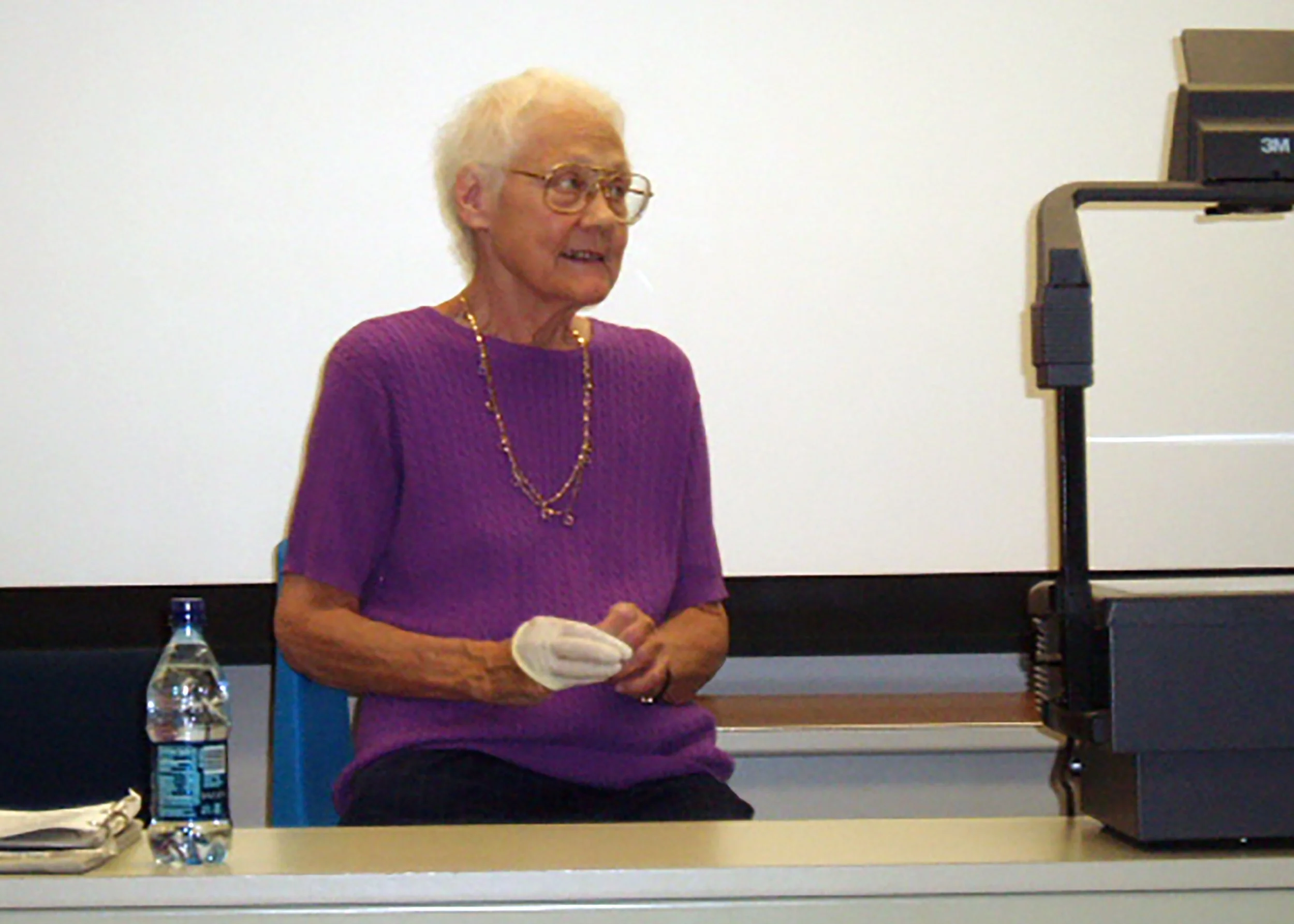
July 31, 1932 - February 18, 2007 (74)
“Equality means more than passing laws. The struggle is really won in the hearts and minds of the community, where it really counts."
Activist/Artist
Biography
Barbara Gittings (she/her) spent her life challenging the idea that being queer was something to be hidden, pitied, or cured. Often called the “Mother of the Gay Rights Movement,” she stood at the front lines of LGBTQ+ liberation decades before Stonewall, transforming quiet defiance into national activism. Through courage, persistence, and unapologetic visibility, Gittings helped reshape public understanding of queer identity, from a supposed “disorder” to a proud and powerful community.
Born in Vienna, Austria, to American parents stationed abroad, Gittings grew up in Wilmington, Delaware, during an era when queerness was considered a sickness. Her curiosity about who she was came at a steep cost. As a teenager at Wilmington High School, she was denied entry into the National Honor Society because of her “homosexual inclinations.” Humiliated but undeterred, Gittings turned to libraries for answers, only to find books that described people like her as deviant, diseased, and damned. Instead of giving up, she decided to rewrite the narrative.
After briefly attending Northwestern University, Gittings’ relentless search for representation led her to skip classes for the library, a decision that got her expelled but sparked her lifelong mission: to make information about queer people honest, human, and visible. At just 18, she moved to Philadelphia, hitchhiking to New York City gay bars to find community. There, she discovered not only other queer people but the early stirrings of the Homophile Movement, a network of activists who laid the groundwork for modern LGBTQ+ rights.
In 1958, Gittings founded the New York chapter of the Daughters of Bilitis (DOB), the nation’s first lesbian civil rights organization. Serving as its president from 1958 to 1961, she provided a space for women to meet, share experiences, and challenge the suffocating isolation of the time. As editor of The Ladder (1963–1966), the first national lesbian magazine, Gittings pushed the publication into bold new territory, replacing abstract cover art with photographs of real lesbians, shot by her partner Kay Tobin Lahusen, whom she met in 1961. She even used her real name when others hid behind pseudonyms, declaring to the world that visibility itself was an act of revolution.
Her activism often clashed with more conservative members of the movement who feared public exposure, but Gittings believed that dignity couldn’t grow in the dark. In her words, “By the late ’60s, we began to insist on our rights, to spell them out clearly, to go to court to get them, to demand what was ours.” That belief led her and Lahusen to the streets. Between 1965 and 1969, they joined fellow activists like Frank Kameny in organizing the Annual Reminder Day pickets at Independence Hall in Philadelphia, some of the first public demonstrations for gay rights in U.S. history. Dressed formally to defy stereotypes, their signs declared, “Homosexuals Demand Equality.” These protests would lay the groundwork for the first Pride march in 1970.
Gittings’ impact extended far beyond protests. In the early 1970s, she and Kameny led one of the most transformative victories in LGBTQ+ history: the declassification of homosexuality as a mental disorder by the American Psychiatric Association (APA). At the 1972 APA conference, Gittings orchestrated a groundbreaking panel titled “Psychiatry: Friend or Foe to the Homosexual?” featuring an anonymous gay psychiatrist disguised as “Dr. H. Anonymous.” His testimony shattered decades of stigma, and within a year, homosexuality was removed from the Diagnostic and Statistical Manual of Mental Disorders (DSM). The change marked a seismic shift in how queerness was understood by medicine, law, and society.
At the same time, Gittings brought her passion for representation into another arena: libraries. As the founding member and longtime chair of the American Library Association’s Gay Task Force, she fought to ensure that libraries carried accurate, affirming books about queer lives. In 1971, she even organized the first “Hug a Homosexual” booth at the ALA’s national conference, offering free hugs and kisses to anyone willing to show love instead of fear. She went on to publish the first gay bibliography in 1970 and later wrote Gays in Library Land (1990), a history of the movement she helped start within her profession.
In later years, Gittings continued advocating from her home in Philadelphia alongside Lahusen, mentoring younger activists and documenting the movement they helped build. The couple’s partnership became a model of love and resistance, one that spanned nearly half a century. Even as she battled breast cancer, Gittings continued attending events, appearing in documentaries, and educating audiences about the movement’s history and unfinished work.
Barbara Gittings passed away in 2007 at age 74, leaving behind a legacy that fundamentally reshaped the cultural and professional institutions that once excluded queer people. Today, her impact endures in every library that carries LGBTQ+ books, every Pride flag that flies openly, and every person who dares to live truthfully.
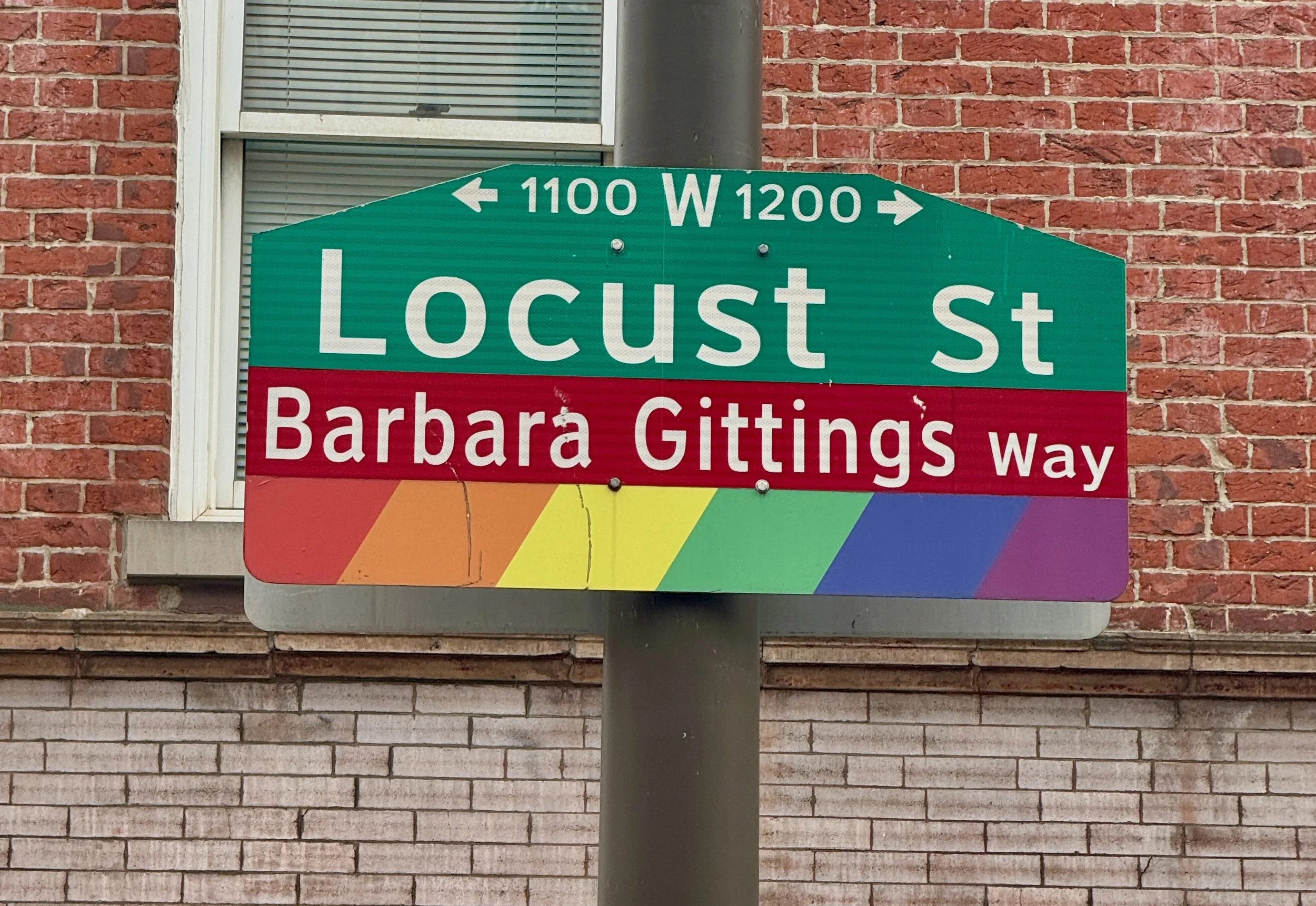
In Philadelphia, a block in the heart of the city’s Gayborhood bears her name, Barbara Gittings Way, a fitting tribute to a woman who spent her life paving the way for others to be seen.