Harvey Milk
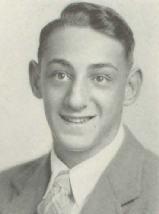
May 22, 1930 - November 27, 1978 (48)
“The only thing they have to look forward to is hope. And you have to give them hope. Hope for a better world, hope for a better tomorrow, hope for a better place to come to if the pressures at home are too great. Hope that all will be all right. Without hope, not only gays, but the blacks, the seniors, the handicapped, the us'es, the us'es will give up. And if you help elect to the central committee and other offices, more gay people, that gives a green light to all who feel disenfranchised, a green light to move forward. It means hope to a nation that has given up, because if a gay person makes it, the doors are open to everyone."
Political Trailblazer
Biography
Harvey Milk was one of the first openly gay elected officials in the United States and a transformative force in American civil rights history. Born in 1930 in Woodmere, New York, to a Jewish family, Milk’s early life was defined by intellect, humor, and a desire for authenticity. After serving in the U.S. Navy and working on Wall Street, he eventually made his way to San Francisco, a city that would shape his destiny and amplify his voice.
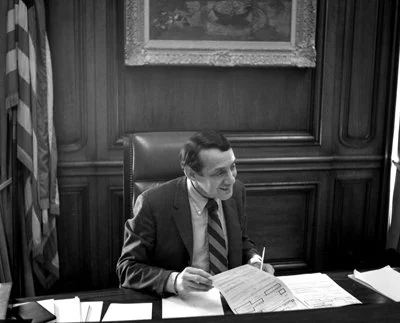
Before politics, Milk was an entrepreneur and community builder. In 1973, he opened Castro Camera, a neighborhood photography shop that doubled as a hub for connection and organizing within the emerging gay community. But his rise to activism was sparked by a series of injustices, government overreach, educational underfunding, and political corruption that lit a fire in him to take action. “I can get involved and do something about the things that are wrong in this society,” he said.
That same year, Milk ran his first campaign for the San Francisco Board of Supervisors. He lost, but not in spirit, his impassioned concession speech reflected a man who had tasted freedom and refused to give it back. In the years that followed, he sharpened his strategy, cut his hair, traded his jeans for suits, and ran again, this time, with a movement behind him.
As “The Mayor of Castro Street,” Milk transformed frustration into coalition. When local merchants refused to accept his membership because he was gay, he founded the Castro Village Association, uniting the community and leveraging economic power to drive social change. His leadership during the Coors Beer Boycott forged alliances between the gay community and labor unions, proving that collective action across identities could shift power structures.
By 1977, after several hard-fought campaigns, Harvey Milk was elected to the San Francisco Board of Supervisors under newly adopted district elections. His victory made history, not only for LGBTQ+ representation but for the promise it signified to marginalized people everywhere. His politics were rooted in people over power. He fought tirelessly against anti-gay legislation like the Briggs Initiative, urging queer individuals to come out and be visible, because visibility itself was resistance.
Harvey’s message of hope became his lasting legacy. He believed that every person who dared to live authentically, whether in San Francisco or small towns like Altoona, Pennsylvania, was part of something larger.
On November 27, 1978, Harvey Milk and San Francisco Mayor George Moscone were assassinated by former city supervisor Dan White, who had recently resigned and sought to be reinstated. White, motivated by personal grievances and deep-seated biases, brutally ended the lives of two progressive leaders, sending shockwaves through San Francisco and the nation. Milk’s assassination was not only a personal tragedy but a stark reminder of the intense hostility that LGBTQ+ people faced, even in a city considered a haven for gay life.
The immediate aftermath was tense and emotional. On May 21, 1979, the city erupted in the White Night Riots, after White was convicted of voluntary manslaughter rather than murder, receiving a sentence of just seven years. Thousands of mourners and activists marched through San Francisco in outrage and grief, demanding justice and demonstrating the power of collective action. Candlelight vigils, memorials, and marches filled the streets, ensuring that Milk’s vision and life would not be forgotten.
Milk’s death came at a critical time in the fight for LGBTQ+ rights. Nationally, the “Save Our Children” campaign led by Anita Bryant had been spreading fear and misinformation about gay people, while the Briggs Initiative sought to ban LGBTQ+ teachers from California schools. Milk had worked tirelessly to oppose these measures, encouraging gay people to come out and fight for their rights, and his assassination galvanized a movement that might have otherwise faltered. Less than a year after his death, the first National March on Washington for Lesbian and Gay Rights was held on October 14, 1979, showing that his vision for visibility, hope, and equality could not be silenced.
Harvey Milk’s legacy extends far beyond San Francisco. He demonstrated that political courage, community organizing, and unapologetic authenticity could challenge entrenched power structures. From inspiring the establishment of LGBTQ+ representation in elected office to influencing national campaigns for gay rights, Milk’s work continues to resonate. Contemporary initiatives, like the “It Gets Better” campaign, and openly LGBTQ+ politicians around the world echo the hope and activism he embodied. Milk’s life shows that even in the face of danger and loss, one person’s voice and one community’s collective action can change history.