

Langston Hughes
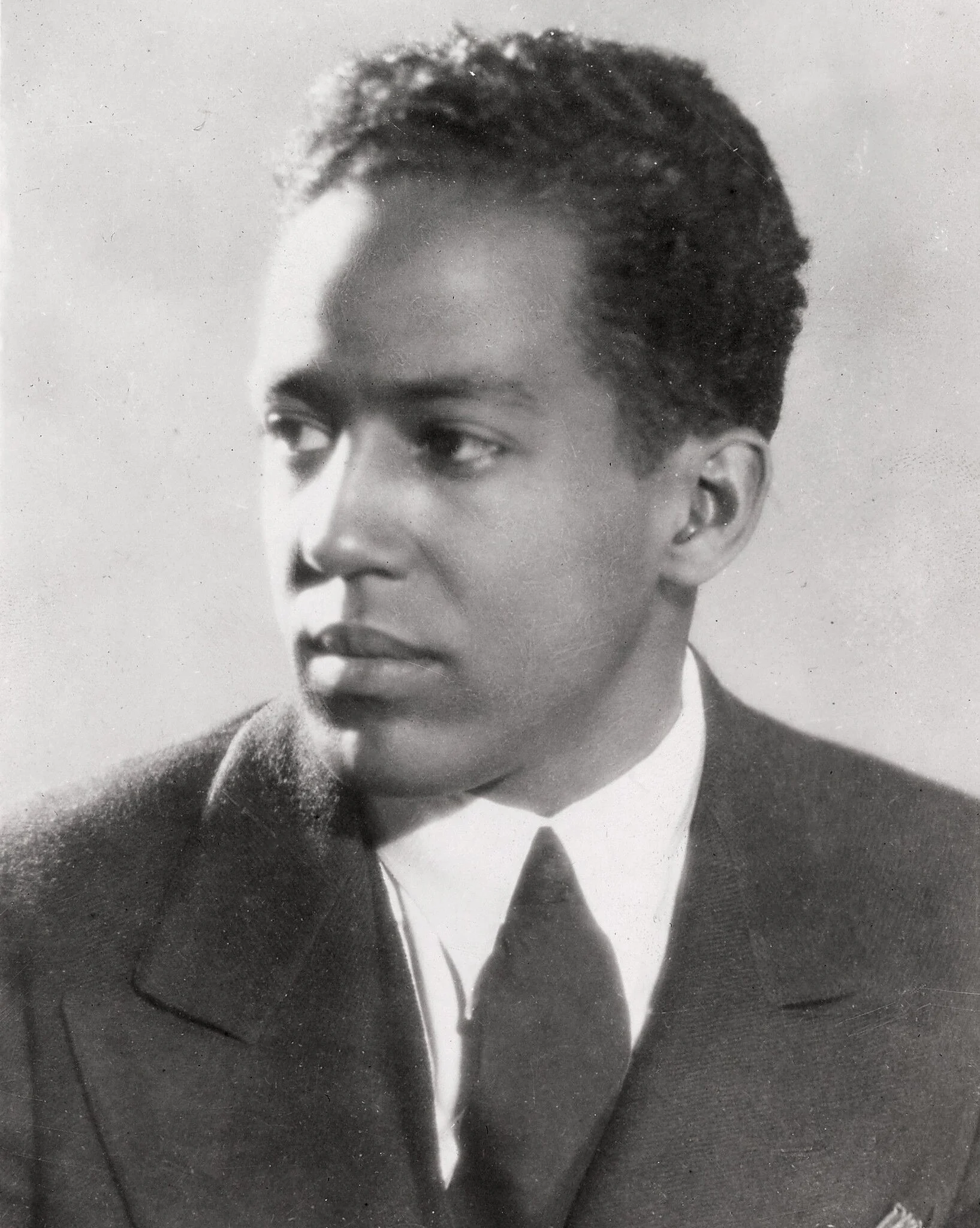
February 1, 1901 - May 22, 1967 (66)
“I swear to the Lord I still can’t see, why Democracy means, everybody but me.”
Artist/Performer
Biography
James Mercer Langston Hughes (he/him) was born on February 1, 1901, in Joplin, Missouri, to James Nathaniel Hughes and Carrie Langston Hughes. Hughes was descended from both formerly enslaved African American women and white slaveholders in Kentucky, a lineage that would inform the racial consciousness that ran throughout his work. After his parents divorced, Hughes was raised primarily by his maternal grandmother, Mary Sampson Patterson Leary Langston, until he was thirteen. Her influence instilled in him values of perseverance, pride, and self-expression, qualities that would define his life and work.
Hughes’s early life was marked by mobility and observation. He lived in Lincoln, Illinois, with his mother and stepfather, then in Cleveland, Ohio, where he attended high school and began writing poetry, short stories, and plays. He spent time in Mexico, Europe, and Africa, traveling widely and observing the lives of Black people around the world. These experiences broadened his worldview and shaped his commitment to representing African American life honestly and vibrantly in literature.
In 1921, Hughes published his first poem, The Negro Speaks of Rivers, in The Crisis, marking the beginning of a career that would profoundly impact American literature. He later graduated from Lincoln University in Pennsylvania in 1929. Hughes’s first book of poetry, The Weary Blues (1926), introduced a poetic style rooted in the rhythms of jazz and blues, reflecting the lived experiences of everyday Black Americans. That same year, he published an essay in The Nation, often cited as a manifesto for the Harlem Renaissance:
“The younger Negro artists who create now intend to express our individual dark-skinned selves without fear or shame. If white people are pleased we are glad. If they are not, it doesn’t matter. We know we are beautiful. And ugly, too. The tom-tom cries, and the tom-tom laughs. If colored people are pleased we are glad. If they are not, their displeasure doesn’t matter either. We build our temples for tomorrow, strong as we know how, and we stand on top of the mountain free within ourselves.”
Hughes was a poet of the people. He refused to separate his personal experience from the collective experience of Black America. His writing portrayed the full spectrum of African American life from love, music, and humor to systemic injustice and oppression. He wrote novels, short stories, plays, essays, and works for children, while pioneering “jazz poetry,” which infused the cadence of blues and jazz into literary form. Hughes’s first novel, Not Without Laughter (1930), won the Harmon Gold Medal for Literature, further cementing his literary significance.
Beyond the United States, Hughes’s work resonated globally. He traveled extensively through Europe, Africa, Russia, and the Caribbean, bringing international attention to African American art and culture. He helped foster the careers of Black writers abroad and collaborated with international figures like Cuban poet Nicolás Guillén. In the 1960s, Hughes was celebrated in Nigeria, Ghana, and Senegal, where his poetry became a symbol of shared Black identity and resistance. Venezuela even nominated him for the Nobel Prize in Literature in 1960, underscoring his global impact.
Hughes’s activism and political awareness often drew the scrutiny of the U.S. government. He was surveilled by the FBI for suspected communist sympathies, and in 1953, he was called to testify before Senator Joseph McCarthy during the height of anti-communist investigations. Hughes navigated these challenges with the same honesty and courage that defined his art, addressing injustice in poems like Let America Be America Again and Harlem (A Dream Deferred):
“What happens to a dream deferred?
Does it dry up like a raisin in the sun?
Or fester like a sore—
And then run?
Does it stink like rotten meat?
Or crust and sugar over—like a syrupy sweet?
Maybe it just sags like a heavy load.
Or does it explode?”
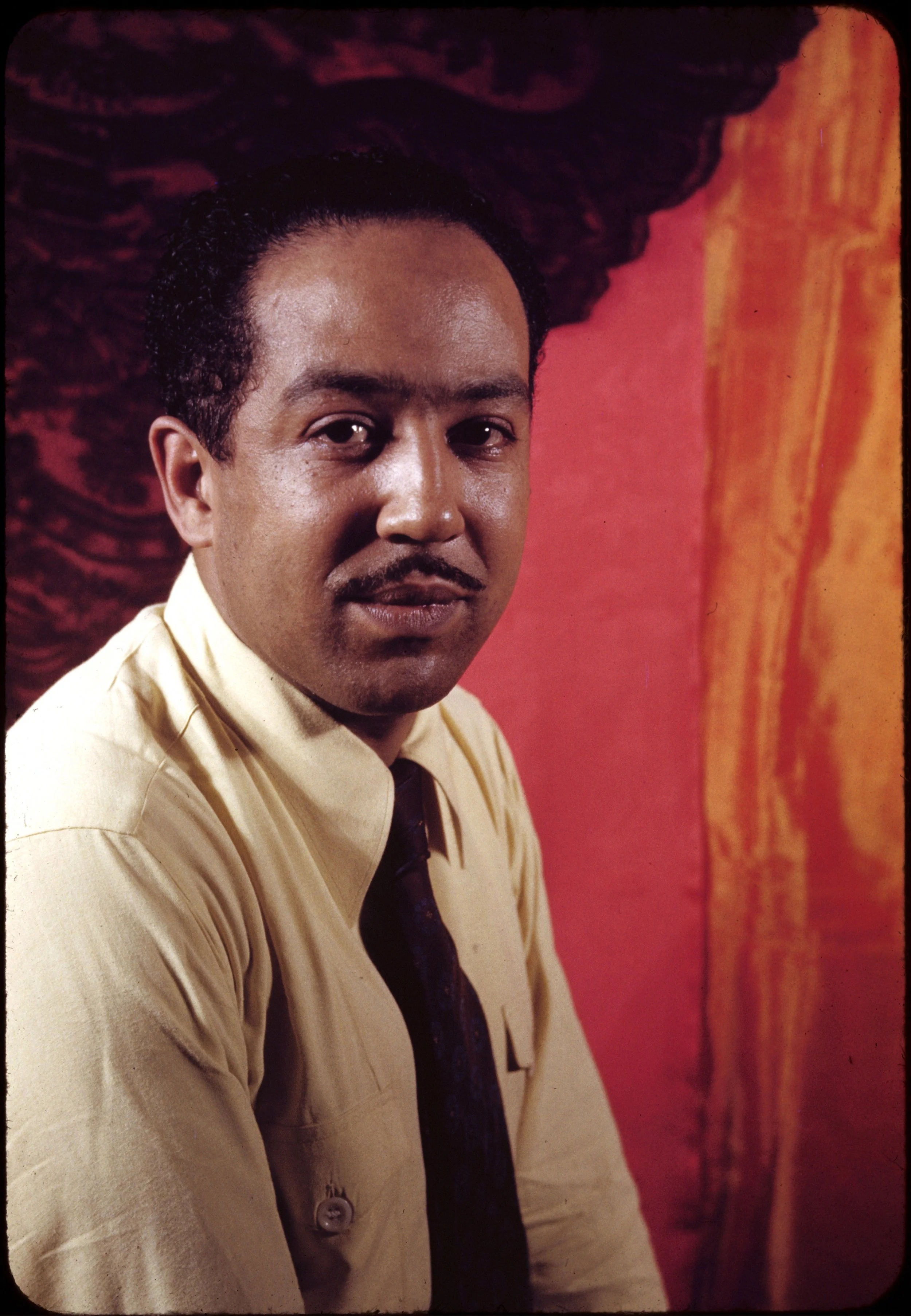
Hughes’s work challenged America to confront its failures while celebrating the resilience, creativity, and beauty of Black life. He remained politically engaged, socially conscious, and artistically prolific until his death on May 22, 1967, in New York City. He died in the Stuyvesant Polyclinic from complications after abdominal surgery related to prostate cancer. Today, Hughes is remembered as one of the greatest writers of the 20th century, a central figure of the Harlem Renaissance, and a voice that continues to inspire generations worldwide. His legacy is preserved through institutions like the Langston Hughes Center at the University of Kansas, which promotes African American studies, artistic expression, and social justice.
While Langston Hughes never publicly identified as LGBTQ+, scholars and historians have noted significant queer undertones in his life and work. Hughes formed deep, often intense relationships with men, including friends and mentors like Alain Locke and Countee Cullen, and his poetry and unpublished writings occasionally explore same-sex desire, as in Café: 3 A.M. and short stories like Blessed Assurance and Seven People Dancing.
He frequented Harlem’s vibrant queer social spaces, including drag balls and gatherings of artists and intellectuals, demonstrating both familiarity with and empathy for Black queer communities of his time. Hughes, however, largely maintained sexual ambiguity in public, choosing instead to focus on the collective struggle of African Americans. This deliberate privacy reflects the realities of early 20th-century life, when homosexuality was heavily stigmatized and often criminalized.